
Description
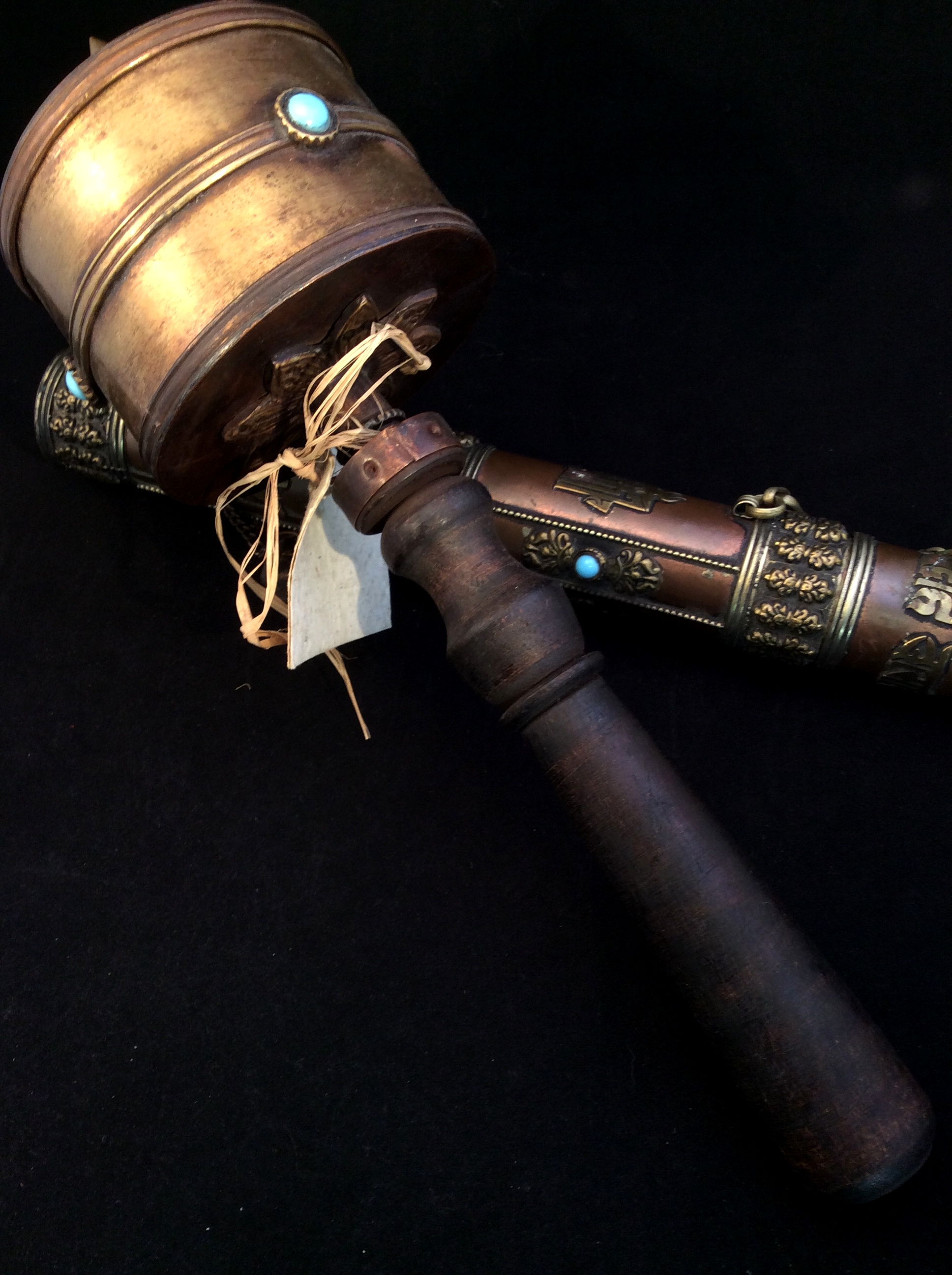
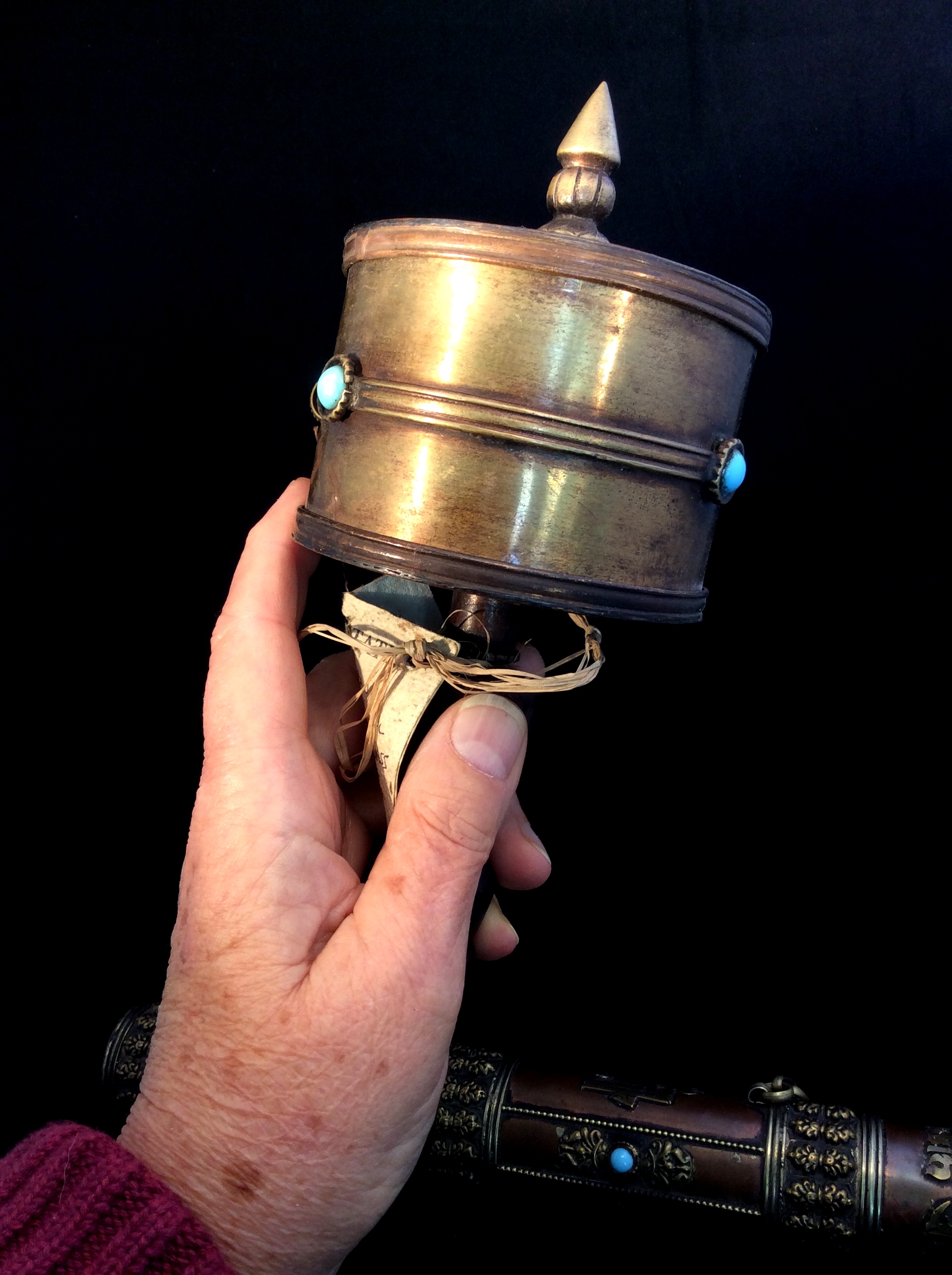
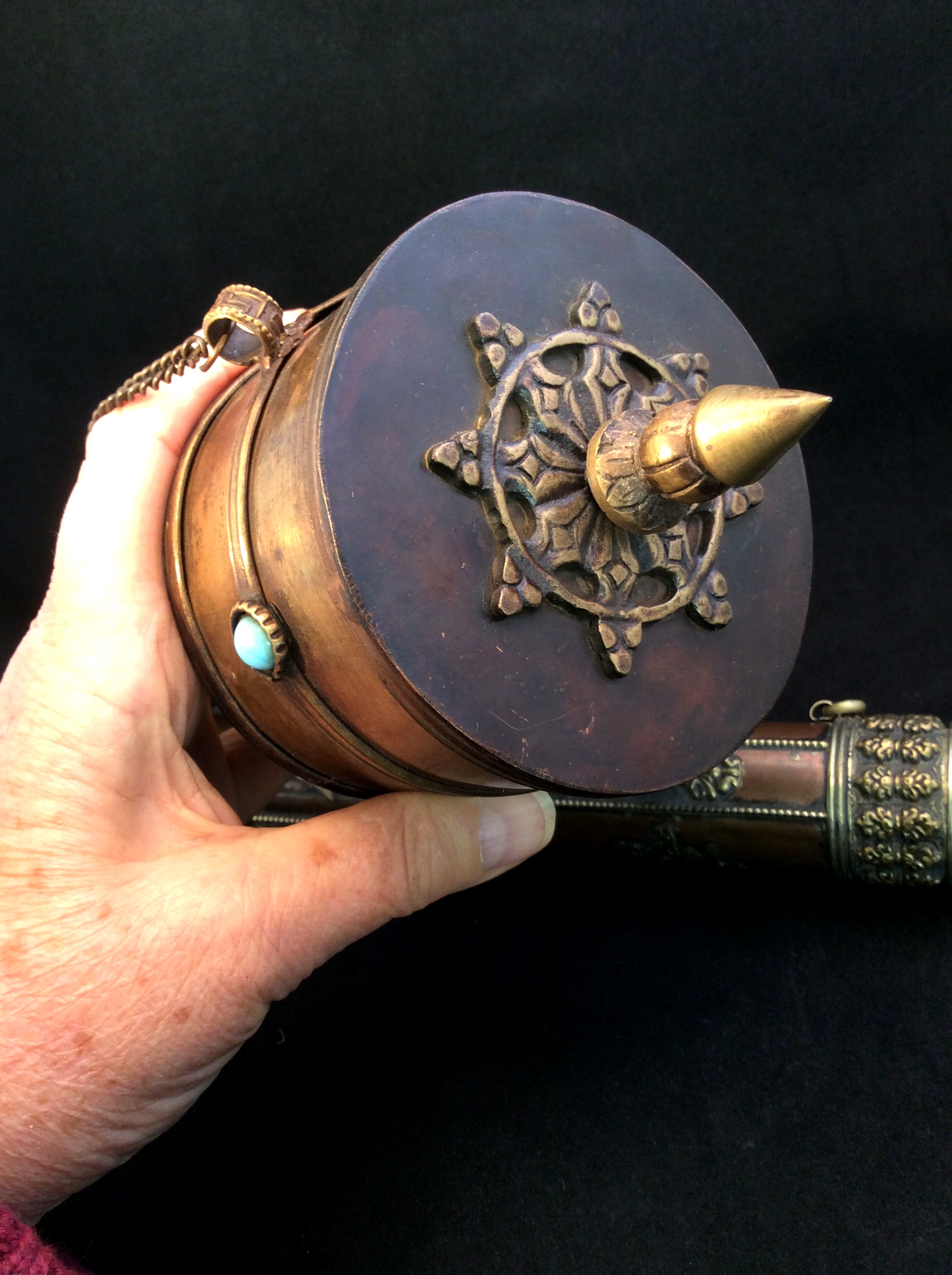
12 inch brass Tibetan prayer wheel. 11 inch diameter. Has om mani pedme hum mantra scrolls inside. Turns easily. Brass lotus at bottom and wheel of dharma at the top.
The ancient texts tell us that the Prayer Wheel was brought to our world by Nagarjuna, a famous Indian Buddhist scholar, philosopher, and yogi. Nagarjuna is associated with the rise of Mahayana Buddhism during the first century B.C.E. and is well known as the founder of the Middle Way school of Buddhist philosophy – which all currently existing schools of Tibetan Buddhism accept as the most profound of all philosophical views. Nagarjuna was filled with great compassion and concern for others. He was an extremely gifted and intelligent teacher who thought continually about how to best benefit others. Nagarjuna’s teachings not only began one of the greatest philosophical traditions of all time, but also contributed immeasurably to a cultural transformation that spread the Mahayana Buddhist vision of universal responsibility and compassion for all life throughout most of Central and East Asia.
The prayer wheel lineage was brought to Tibet by the renowned eight century Indian Buddhist teacher Padmasambhava, and later practiced by the great Indian tantric Buddhist masters Tilopa and Naropa. Naropa’s disciple Marpa later renewed the lineage in Tibet and passed it on to Tibet’s most well known yogi, Milarepa.
In Tibet, Prayer Wheels have been made for many centuries in a wide range of sizes and styles – from hand-held and table-top wheels, all the way up to giant eight or twelve foot Prayer Wheels with diameters of five to six feet. Often built around Buddhist Stupas and Monasteries, there may be long rows of prayer wheels which people will spin as they walk clockwise around the building, reciting what is considered to be one of the most profound and beneficial mantras; In the translation of a text by the Fourth Panchen Lama, Amitabha Buddha says “Anyone who recites the six syllables while turning the dharma wheel at the same time is equal in fortune to the Thousand Buddhas.” In the same text Shakyamuni Buddha says that “turning the prayer wheel once is better than having done one, seven, or nine years of retreat” The prayer wheel is a very powerful merit field; one accumulates extensive merit and purifies obstacles.It has been well known for over a thousand years by the great Buddhist yogis and teachers as well as the Tibetan people that the prayer wheel practice is an extremely quick, simple and profound method for developing compassion and wisdom. Buddhist teachers and the ancient texts expound the profound benefits of the Prayer Wheel for its ability to quickly harmonize the environment, increase compassion, encourage a peaceful state of mind, and assist practitioners on their journeys to enlightenment.
It is suggested that one recite the six-syllable mantra – Om Mani Padme Hum – while turning the prayer wheel. The Tibetan commentaries state that the benefits of doing so are immeasurable. This is the mantra of Avalokiteshvara, the Buddha of Compassion, and it is recited continually by many Tibetans. One also finds it carved on rocks, written on prayer flags, embossed on jewelry, and inside of most prayer wheels. Among Tibetans it is commonly known as the mani mantra, and thus prayer wheels are often referred to among Tibetans as mani wheels.
Mantras are strings of syllables empowered by enlightened beings to benefit others. “The word mantra’ means ‘mind-protection’. It protects the mind from ordinary appearances and conceptions” that characterize the ongoing cycle of samsaric suffering. Different mantras are said to bring different benefits, with regard to the mani mantra, “The mani is not just a string of ordinary words. It contains all the blessings and compassion of Avalokiteshvara,”The role of mantras in Buddhist practice is often not well understood in the West. It has been scientifically documented that mantra recitation produces significant psychological and physiological relaxation, and statistical analyses have shown that meditation with traditional mantras produces a greater reduction than other kinds of meditation (including mediation with randomly selected Sanskrit syllables or with personally selected English words). Westerners have tended to emphasize the relaxing effect of mantra recitation in their understanding of this practice. From a Tibetan Buddhist perspective, such relaxation is not the goal of mantra recitation; rather it is a positive but minor side effect.“In solitary stony fastness among the mountains, there is a strange market..where one can barter the vortex of life, for boundless bliss” Milarepa


Reviews
There are no reviews yet.